.gtr-container-7x9y2z {
font-family: Verdana, Helvetica, "Times New Roman", Arial, sans-serif;
color: #333;
line-height: 1.6;
padding: 20px;
box-sizing: border-box;
}
.gtr-container-7x9y2z-main-title {
font-size: 18px;
font-weight: bold;
margin-bottom: 10px;
text-align: left;
color: #0056b3;
}
.gtr-container-7x9y2z-subtitle {
font-size: 14px;
margin-bottom: 20px;
text-align: left;
color: #555;
}
.gtr-container-7x9y2z-section-title {
font-size: 18px;
font-weight: bold;
margin-top: 30px;
margin-bottom: 15px;
text-align: left;
color: #0056b3;
border-bottom: 2px solid #eee;
padding-bottom: 8px;
}
.gtr-container-7x9y2z p {
font-size: 14px;
margin-bottom: 15px;
text-align: left !important;
line-height: 1.6;
}
.gtr-container-7x9y2z strong {
font-weight: bold;
color: #0056b3;
}
.gtr-container-7x9y2z-list {
list-style: none !important;
padding-left: 0;
margin-bottom: 20px;
}
.gtr-container-7x9y2z-list li {
position: relative;
padding-left: 20px;
margin-bottom: 8px;
font-size: 14px;
text-align: left;
}
.gtr-container-7x9y2z-list li::before {
content: "•" !important;
position: absolute !important;
left: 0 !important;
color: #0056b3;
font-weight: bold;
font-size: 16px;
line-height: 1;
}
.gtr-container-7x9y2z-feature-section {
margin-top: 30px;
margin-bottom: 30px;
padding: 20px;
border: 1px solid #ddd !important;
border-radius: 4px;
}
.gtr-container-7x9y2z-feature-title {
font-size: 16px;
font-weight: bold;
margin-bottom: 10px;
color: #0056b3;
}
.gtr-container-7x9y2z-feature-subtitle {
font-size: 16px;
font-weight: bold;
margin-top: 20px;
margin-bottom: 15px;
color: #333;
}
.gtr-container-7x9y2z-feature-item {
margin-bottom: 15px;
}
.gtr-container-7x9y2z-feature-item-title {
font-size: 14px;
font-weight: bold;
margin-bottom: 5px;
color: #333;
}
.gtr-container-7x9y2z-feature-item-description {
font-size: 14px;
margin-bottom: 0;
color: #555;
}
.gtr-container-7x9y2z-image-wrapper {
margin-bottom: 20px;
}
@media (min-width: 768px) {
.gtr-container-7x9y2z {
padding: 30px 50px;
max-width: 960px;
margin: 0 auto;
}
}
How Compact High and Low Temperature Test Chambers Improve Reliability Testing for Automotive & Electronic Components
Discover how compact high and low temperature test chambers help engineers validate product reliability, reduce failure risks, and meet IEC & ISO environmental testing standards.
Introduction: Why Temperature Testing Matters More Than Ever
In today’s fast-evolving automotive and electronics industries, reliability is no longer optional—it is expected.
From automotive sensors and EV components to PCBs and precision materials, even the smallest temperature fluctuation can cause hidden failures. These failures often appear not during production, but months—or years—later in real-world use.
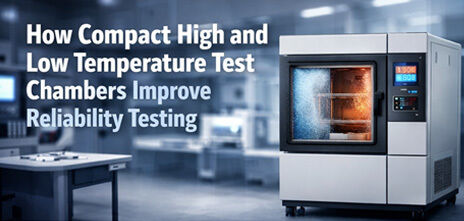
This is where a compact high and low temperature test chamber, also known as an environmental test chamber, becomes an essential tool rather than a luxury.
The Challenge: Limited Space, Growing Testing Demands
Many laboratories and quality control departments face the same dilemma:
Limited lab space
Increasing test standards
More frequent reliability validation
Higher expectations from OEMs and regulators
Large environmental chambers are not always practical for small parts, R&D samples, or pilot testing. Engineers need a solution that is compact, precise, and compliant.
The Solution: Compact Environmental Test Chambers
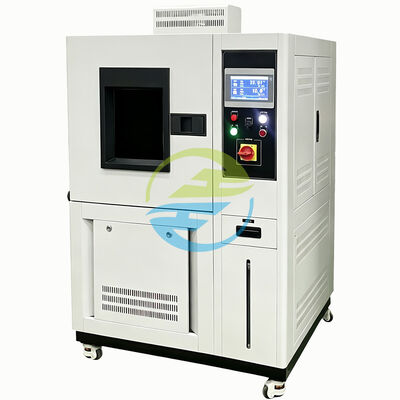
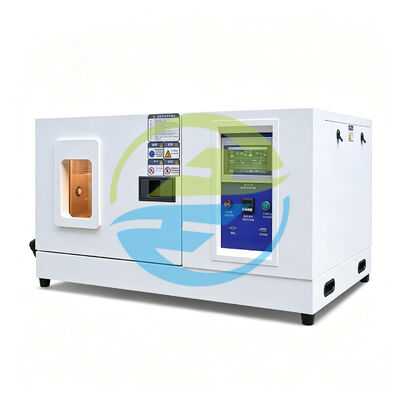
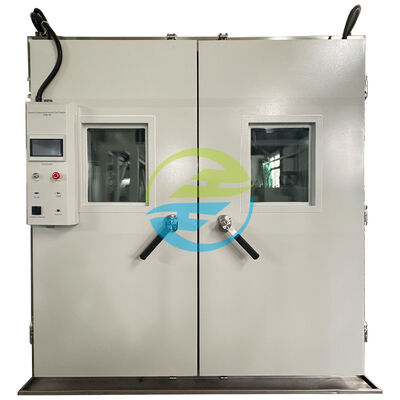
A small high and low temperature test chamber, such as the 80L class, is designed specifically for:
Precision temperature cycling
High / low temperature aging tests
Early-stage failure detection
Standard-compliant validation testing
Despite its compact size, it delivers the same control logic, safety architecture, and test credibility as larger environmental chambers.
How the HeJin Compact High and Low Temperature Test Chamber Solves These Problems
As a source manufacturer, HeJin designs compact environmental test chambers with real-world engineering needs in mind.
Key Solution Advantages
Space-Efficient Design
Ideal for labs with limited floor space while maintaining professional test performance.
Stable Temperature Accuracy
Ensures repeatable results for R&D, quality inspection, and compliance testing.
Standard-Oriented Engineering
Designed with IEC 60068 and ISO 16750 testing logic in mind.
Lower Energy Consumption
Optimized refrigeration and insulation reduce long-term operating costs.
Scalable for Future Needs
Supports custom temperature ranges, control programs, and safety upgrades.
Standards Supported by Compact Temperature Chambers
A professional environmental test chamber is not just about temperature—it is about compliance.
Commonly referenced standards include:
IEC 60068-2-1 – Cold test methods
IEC 60068-2-2 – Dry heat testing
IEC 60068-2-14 – Temperature change & cycling
ISO 16750-4 – Automotive environmental testing
GB/T 2423 Series – National equivalent standards
These standards are widely required by OEMs, Tier 1 suppliers, and certification bodies.
Why Compact Chambers Are Ideal for R&D and Quality Control
Large chambers are powerful—but not always efficient.
Compact environmental test chambers offer:
Faster test preparation
Lower operating costs
Easier sample handling
Faster design iteration
For engineers, this means shorter development cycles and earlier risk detection.
HeJin: More Than Equipment, A Testing Solution Partner
HeJin is not a distributor.We are a manufacturer focused on environmental test chambers and automotive testing solutions.
What customers value most:
Direct technical communication
Customizable solutions
Reliable long-term support
Stable supply of spare parts
Our compact high and low temperature test chambers are designed to support your testing goals today and scale with your needs tomorrow.